
Two client projects can each have a sensible task list and still collide over your next available review slot. AI project management for freelancers helps when it keeps requests, code changes, and delivery evidence attached to the right client. The freelancer still decides what to promise and when.
Consider two fictional engagements throughout this workflow: Cedar's appointment-booking website and Harbor's wholesale customer portal. They illustrate coordination decisions, not reported client results or measured time savings.
Separate Client Commitments Before Delegating Work
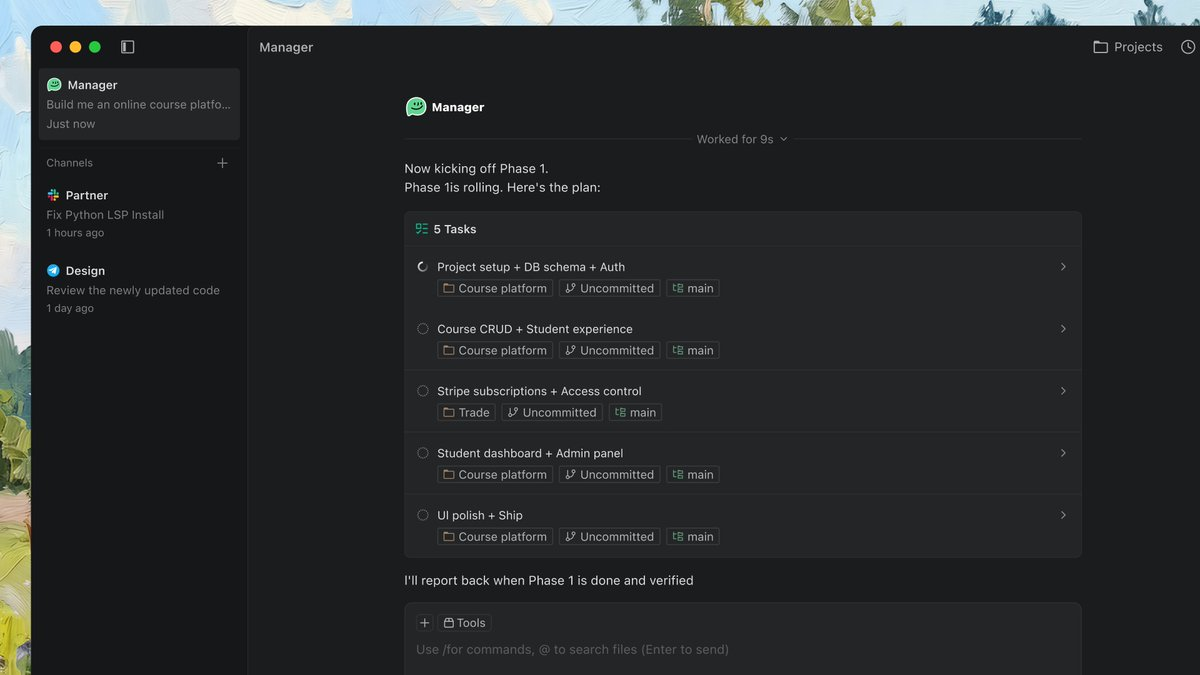
Start with a separate commitment record for each engagement. Name the repository, agreed milestone, acceptance criteria, unresolved decisions, and person authorized to approve changes. Keep proposed deadlines distinct from dates you have confirmed with the client.
| Project | Current commitment | Acceptance evidence | Outside this milestone |
|---|---|---|---|
| Cedar booking site | Let visitors request an available appointment | Unavailable slots are rejected; duplicate submissions create one request | Online payments |
| Harbor customer portal | Let approved buyers view their order history | Buyers see only their own orders; revoked accounts cannot access them | Returns processing |
Delegate against those boundaries. An implementation agent can work on Cedar's submission handling while a review agent examines Harbor's access checks, provided each has the correct repository and permissions. Within a project, avoid simultaneous edits to the same files unless ownership and integration are explicit.
Your review capacity remains a shared dependency. Two agents finishing together do not create two hours in which you can inspect their work.
Build a Repeatable Client Project Workflow
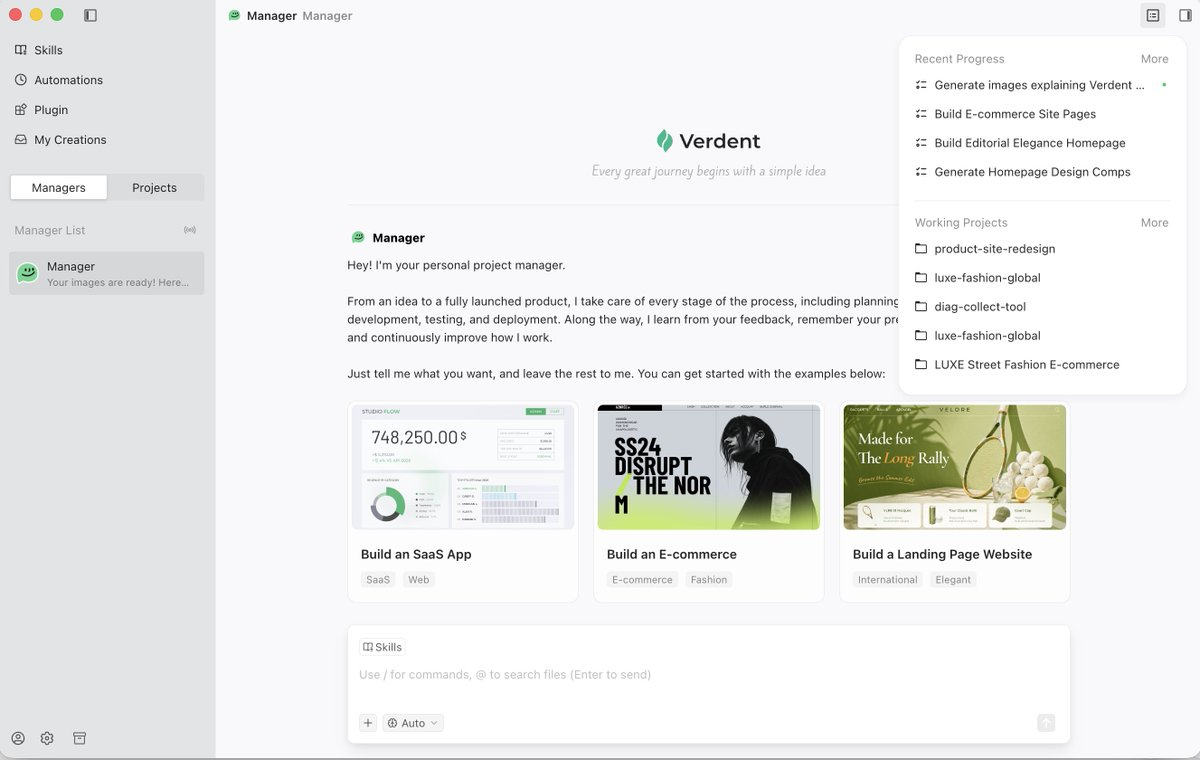
A repeatable AI freelance developer workflow connects each request to a project record, a bounded task, and a reviewable result. Use the same record format across clients while keeping their contents separate.
Keep Each Brief With Its Repository and Acceptance Criteria
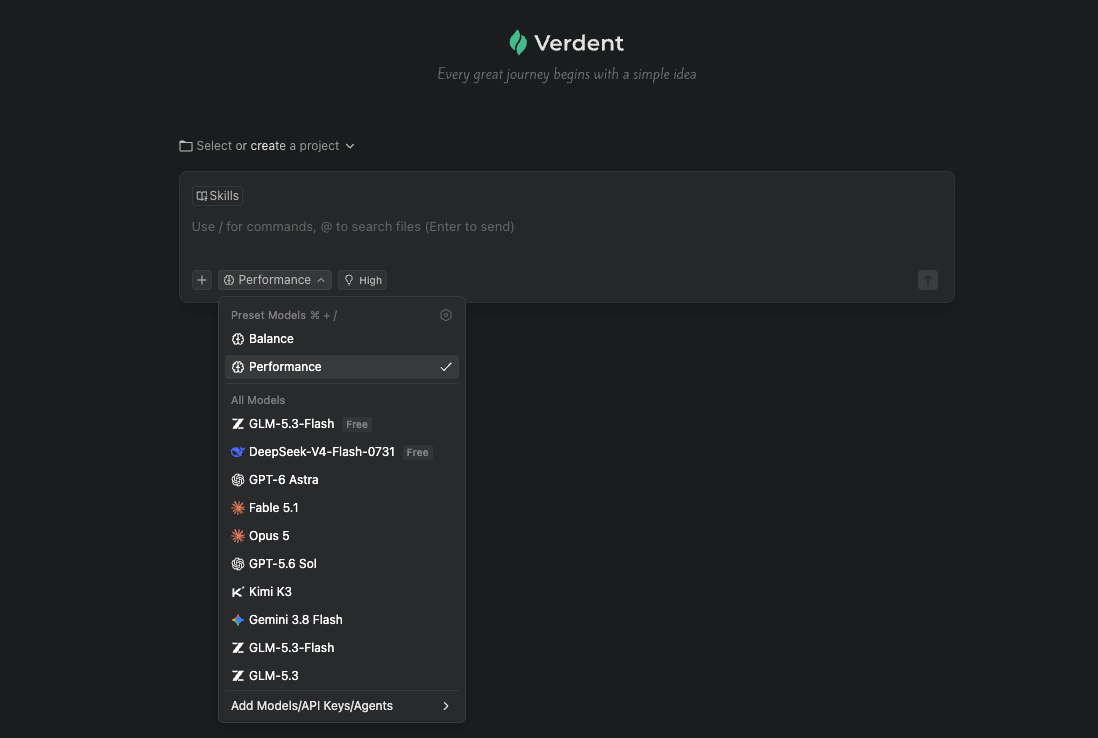
Store a sanitized brief alongside the relevant code, with links to approved requirements and decisions. Include test commands, environment names, deployment restrictions, and the current milestone. Keep secrets and unnecessary customer data out of that brief.
For Cedar, specify what happens if two visitors request the same slot. For Harbor, define which account states permit order access. These details let agents propose meaningful tests instead of interpreting “booking works” or “portal is secure.”
Ask each delegated task to return changed files, checks actually run, unresolved questions, and the commit or diff to review. If a requirement is missing, have the agent identify the decision it needs before implementing that behavior.
Route Changes to the Correct Client Project
Suppose Cedar asks, “Can customers pay a deposit too?” Record it as a proposed Cedar change, including the original request, affected milestone, and dependencies. Do not silently fold it into the appointment task or let it influence Harbor's portal plan.
AI can inspect the repository and outline likely implementation work. You still need to resolve payment-provider access, failure behavior, testing, and the effect on the existing commitment before confirming a delivery date.
Harbor's request to rename an order-status label follows the same route, even if it appears small. Check whether the label is display text or an API value used elsewhere. Good client project coordination preserves the difference between a requested change, an approved change, and completed work.
Send Progress Updates Grounded in Completed Work
Generate update drafts from diffs, test results, preview environments, and open decisions. Review both the claims and the recipient before sending; activity from one client must never become evidence for another.
If Cedar's submission checks pass but email delivery remains untested, a suitable update would be:
Appointment requests now reject unavailable slots and duplicate submissions in staging. Confirmation-email delivery still needs verification. The deposit request remains outside the current milestone pending a scope decision.
Attach the relevant preview and check results in a real update. For Harbor, an implemented order-history screen with failing access tests should remain “under verification.” Avoid percentage-complete estimates that conceal a release blocker.
Review Deliverables Before the Client Handoff
Review the exact version intended for delivery. A passing test from an earlier commit cannot establish that later changes are ready.
For Cedar, walk through the booking flow in the intended browser and staging environment, including unavailable slots, repeated submissions, and confirmation behavior. Check Harbor with approved, revoked, and different buyer accounts; a convincing screenshot cannot prove order-access boundaries.
The handoff record should contain:
- The release commit or tag and the changes included.
- Acceptance criteria mapped to test results or manual checks.
- Known limitations and work explicitly deferred.
- Deployment steps, required access, and rollback instructions.
- The person responsible for release approval and subsequent maintenance.
An agent's review can contribute findings, but inspect the diff and unresolved risks yourself. Freelance software delivery is incomplete while a release-critical assumption remains untested, even if every implementation task is marked done.
Where Automation Adds Coordination Risk
Recurring checks are useful candidates for automation when their inputs, permissions, and output destination are explicit. A Harbor maintenance check should identify Harbor's repository, environment, and reporting channel rather than rely on whichever project was most recently active.
Automate evidence collection before automating client commitments. A scheduled report can collect test failures; it should not invent a completion date or treat missing results as a clean run. Before rerunning a missed task, check whether its inputs and intended actions are still valid.
In a multi-client development workflow, also consider collisions with your own work. A scheduled dependency update that edits files during release preparation needs a separate execution path or a different schedule.
Applying the Workflow With Verdent Managers
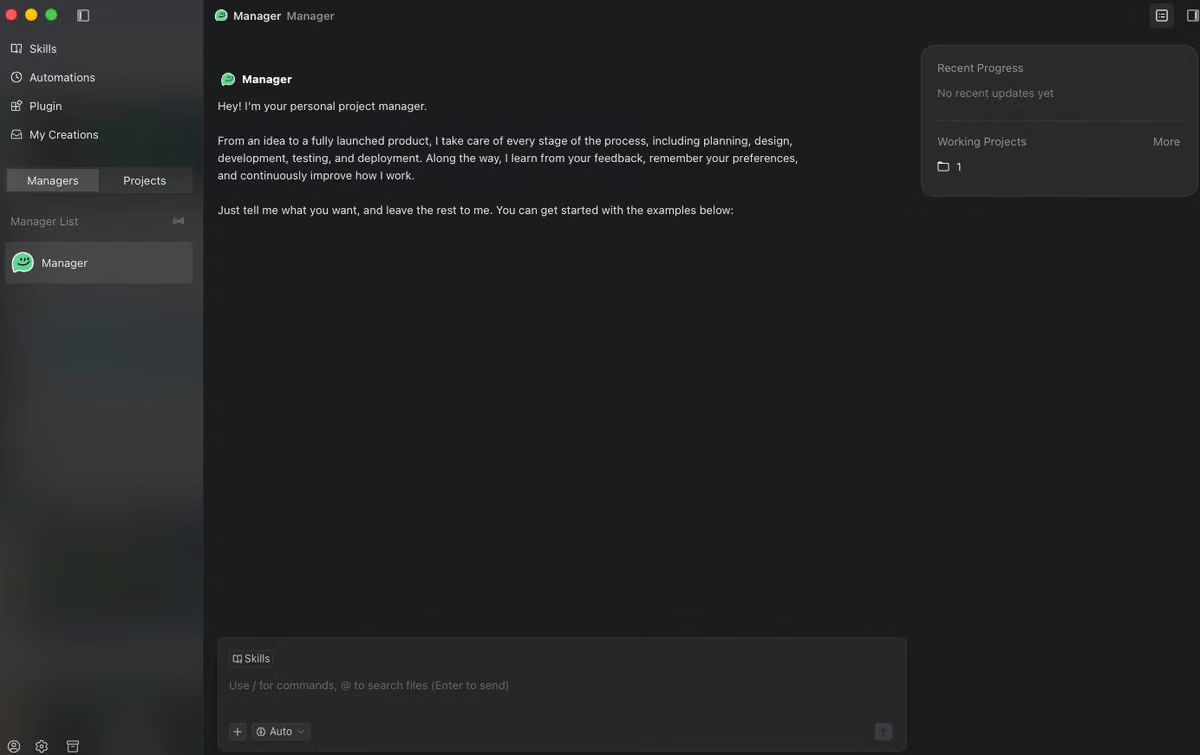
For these fictional engagements, you could assign Cedar and Harbor separate Verdent Managers. With Multiple Managers, each can maintain its own memory, tools, and work state. Configure each around the client's repository and approved scope, then inspect the actual connections before delegating.
That separation does not establish secure client tenant isolation. Workspace Isolation separates code changes through Git worktrees, while tasks within the same workspace share files. The current Desktop interface also hides manual workspace creation; duplicating a response keeps the new task in the current workspace. Verify where work will run rather than assuming a new conversation creates separate files.
For recurring checks, Automation requires the Verdent app to remain active. Closing the app or switching off the computer can leave a run marked Missed; it can then be triggered manually. Do not promise unattended coverage beyond those execution conditions. These product details were checked on September 8, 2026.
FAQ
Can Manager credit usage alone show a client project's profit?
No. Credits capture only part of project cost. Include your implementation and review time, coordination, rework, hosting, other tools, subcontractors, and ongoing support. Allocate shared expenses consistently and compare the resulting project cost with revenue; a usage counter alone cannot establish profitability.
How should an urgent production incident interrupt another client's work?
Confirm the affected client and impact, then preserve a safe checkpoint for the interrupted project. Pause conflicting agents or scheduled writes, record what remains unfinished, and open the incident in the affected client's environment. Communicate any changed delivery expectation. Before resuming, inspect the saved state and outstanding decisions.
Can client-specific credentials live in a shared global configuration?
Avoid that arrangement. Verdent's global MCP configuration is available across projects. Use client-specific identities, minimal permissions, and secure secret injection. The current page gives inconsistent descriptions of project-level support, so verify effective scope in your installed version. A project-local filename alone is insufficient evidence of restricted access.
What happens to connected chat records when a Manager is deleted?
The current Manager deletion behavior includes related connected-chat records, with a warning before deletion. Back up needed records first and check the current documentation and confirmation dialog. Do not assume this describes deletion of every message retained by the external chat service.
How should maintenance tasks be wound down when a client engagement ends?
Inventory recurring checks, reports, and update jobs, then agree who will own any continuing work. Back up necessary records, remove obsolete automations, and revoke access no longer needed. In Verdent, deleting an automation stops its automatic runs. Check for active executions separately; do not assume deleting or archiving a Manager handles every scheduled obligation.
Keep Every Client Promise Tied to Verified Work
Cedar may be ready for a booking preview while Harbor still has an unresolved access failure. The useful outcome is being able to give those clients different, accurate answers. When the evidence is incomplete, the next promise should be a specific verification step—not a release date borrowed from an agent's confidence.